Body Terrain
An interactive chair that turns pressure data into a personal reflection tool, not a diagnosis.
Design Research, Physical Prototyping, Interaction Design
Most product design starts by solving a problem. This project started from a question instead: what if a chair could help someone notice their own body, without telling them what's wrong with it?
Feel Your Body is a low, backrest-free stool fitted with six pressure sensors. As someone sits, the sensors capture how their weight settles and shifts. At the end of a short session, the chair prints a "body terrain" — an abstract, take-home visualization of that person's own pressure pattern, paired with a short reflective prompt.
The system deliberately withholds judgment. There's no posture correction, no flagged "bad" habits, no score. The chair's backrest-free, slightly unstable seat is itself part of the design — a small disruption meant to pull attention back to the body, rather than a comfort feature to optimize.
This is a Final Master Project (TU/e), deployed semi-publicly at the university library over five days. More than 30 people interacted with it, and 19 took part in follow-up interviews.
Impact
Process
Reflection
A chair that reflects your body back to you — without judging it.
Deployed at TU/e library · 5 days
30+
Participants
19
Interviews
16/19 (84%)
interviewees described noticing something new about their body
"Seeing other people's results makes you think about your own body more."
— participant, semi-structured interview
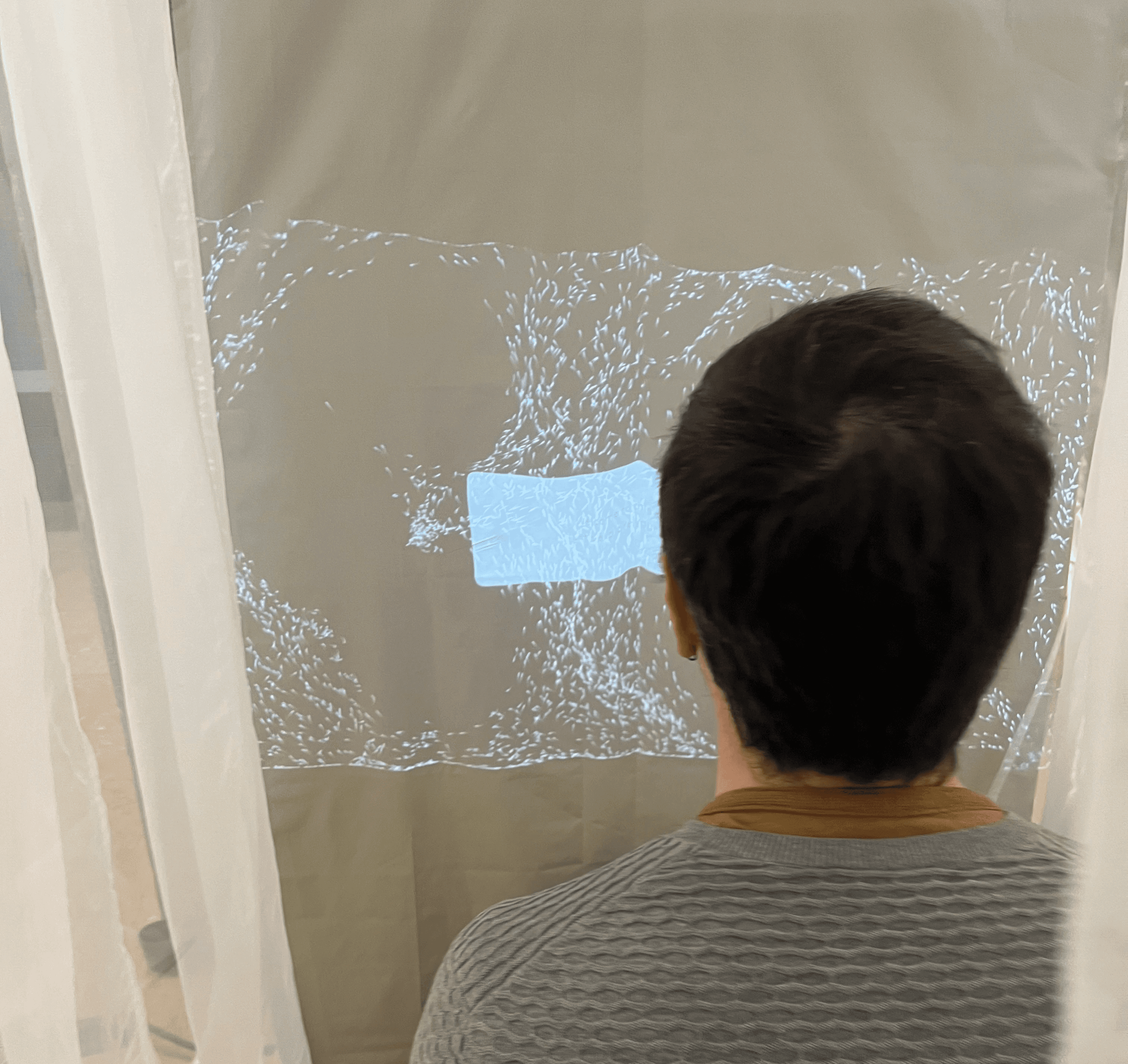
With interactive projection, it allows people to explore without interrupt.
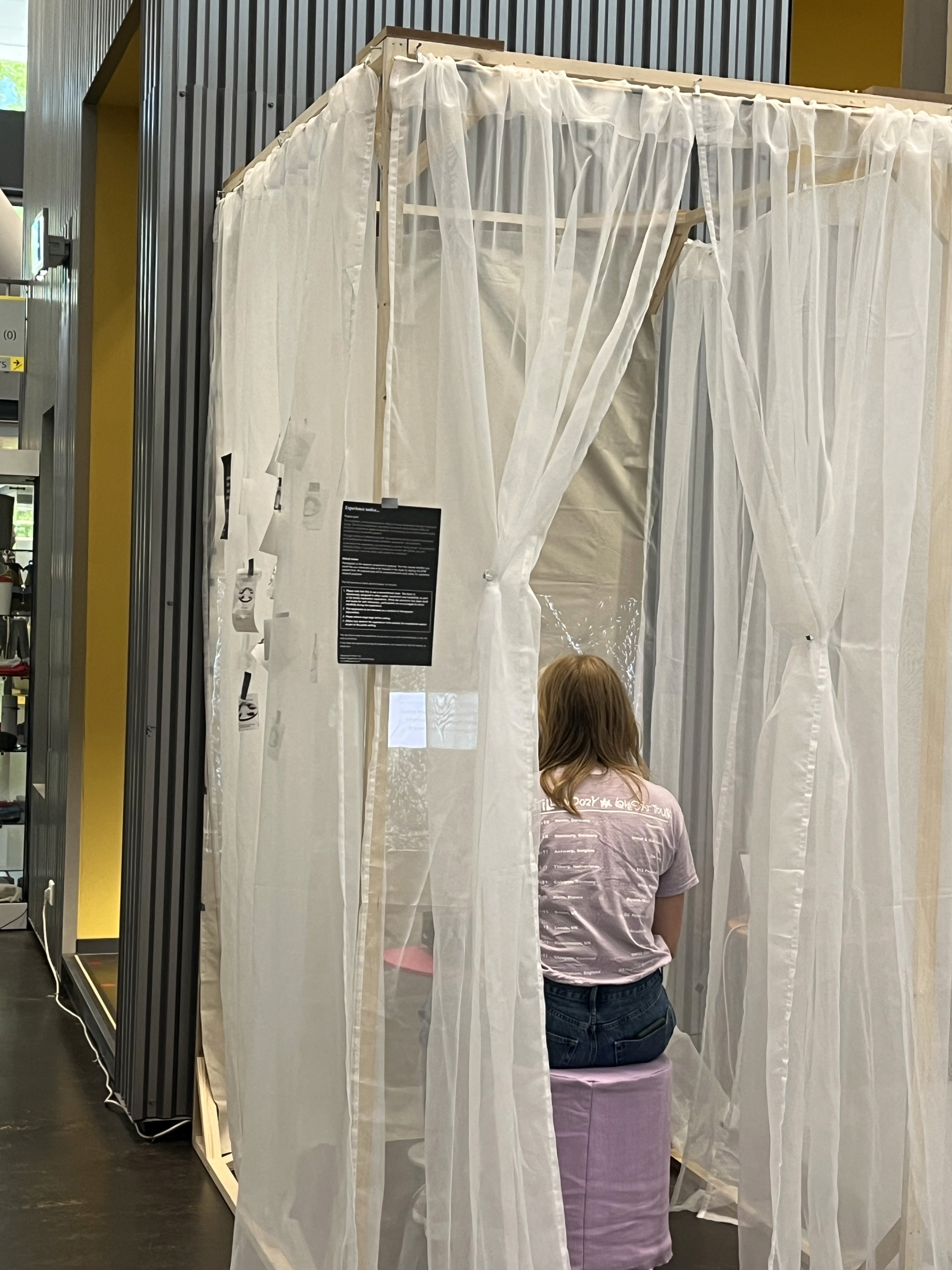
Though the deployment was put in the public, it still provided a sense of private.
A chair that reflects your body back to you — without judging it.
The result is a low, backrest-free stool with six pressure sensors built in. Sit for a few minutes, and it prints out a "body terrain" — a visual snapshot of how your weight actually settles, plus a short reflective prompt. No posture score. No "fix this." No diagnosis. Just your own data, handed back to you to interpret.
I set it up at the TU/e library for five days. No instructions, no gamification — people just walked up and sat down. 30+ people tried it, and 19 stuck around for a quick interview afterward. That's the part I'd point to if you're wondering whether a reflective, non-diagnostic interaction can actually hold someone's attention in a real public space: turns out it can.